
Introduction
If you have ever stepped into a recording studio or a home cinema room and noticed soft, textured tiles lining the walls, you have already seen Acoustic Foam Panels in action. These panels are not just decorative additions — they serve a very specific and important function. Acoustic Foam Panels are specially engineered materials designed to absorb sound waves, reduce echo, and control the noise environment within a room. Whether you are a musician, a content creator, a business owner, or simply someone who wants a quieter and more comfortable space, understanding how these panels work can help you make a smart decision for your environment. This guide breaks it all down in clear, simple terms.

What Exactly Is Acoustic Foam?
Acoustic foam is an open-cell polyurethane foam engineered specifically to manage sound. Unlike regular foam found in furniture or packaging, acoustic foam has a unique cellular structure that allows sound waves to travel into the material and lose energy as they move through it. This process is called sound absorption. The result is a noticeable reduction in reflected noise — the sound that bounces off hard surfaces like walls, ceilings, and floors.
This foam is often cut into wedge, pyramid, or egg-crate shapes. These profiles are not just aesthetic — they increase the surface area exposed to incoming sound waves, which improves the foam’s ability to absorb a wider range of frequencies. The thicker the foam, the better it handles lower frequencies. Thinner panels tend to work better for mid and high-frequency sounds.
How Do Acoustic Foam Panels Work?
When sound is produced in a room — whether it is music, a voice, or background noise — it travels as waves in all directions. When these waves hit a hard surface like a concrete wall or glass panel, most of the energy bounces back into the room. This causes echo, reverberation, and a muddiness in sound that makes speech harder to understand and music harder to enjoy.
When sound waves hit an acoustic foam panel instead, the energy is transferred into the foam material. The sound waves cause the tiny air pockets within the open-cell foam to vibrate rapidly, converting the sound energy into a very small amount of heat through friction. This is the absorption process. The foam does not block sound from entering or leaving the room — that is one of the most common misconceptions about acoustic foam. Instead, it controls what happens to sound inside the room by preventing it from bouncing endlessly off hard surfaces.
This distinction matters. If your goal is to stop sound from travelling between rooms — like preventing workshop noise from disturbing an adjacent office — you need soundproofing materials such as mass loaded vinyl or dense composite barriers. Acoustic foam panels are for controlling sound quality within a room, not for blocking transmission between spaces.
Where Are Acoustic Foam Panels Used?
Recording Studios and Music Rooms
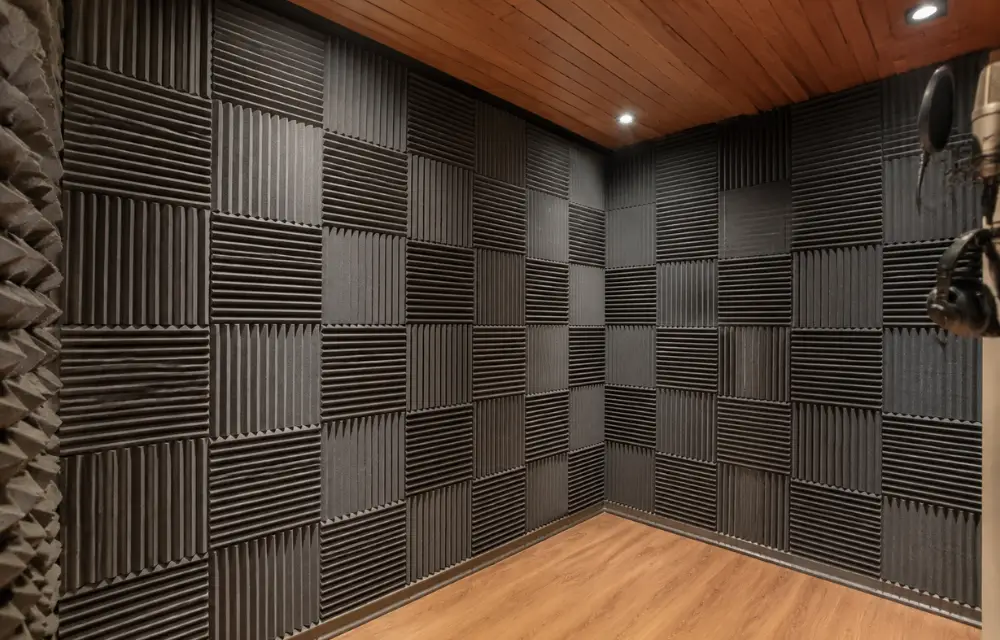
This is probably the most well-known application. In recording environments, achieving a clean and dry sound is essential. Acoustic foam panels placed on walls and sometimes ceilings reduce the natural reverberation of the room, allowing microphones to capture instruments and voices without picking up unwanted room noise. The result is a cleaner, more professional-sounding recording.
Home Cinema and Entertainment Rooms
In home cinema setups, sound quality directly affects the viewing experience. Without acoustic treatment, dialogue sounds muddy and sound effects blur together. Acoustic foam panels absorb excess reflections and create a cleaner listening environment where the speaker system can perform as designed.
Podcast and Voiceover Recording Spaces
Podcasters and voiceover artists often record in home offices or spare rooms that were never designed with acoustics in mind. Placing acoustic foam panels around the recording area dramatically improves voice clarity and eliminates the hollow, echoey quality that makes amateur recordings sound unprofessional.
Office Meeting Rooms and Open-Plan Workspaces
Noise is one of the biggest distractions in modern workplaces. Meeting rooms with hard walls and glass surfaces create significant echo that makes conversations difficult to follow. Acoustic foam panels installed in these spaces absorb reflected sound and improve speech intelligibility, making meetings more productive. In open-plan offices, targeted acoustic treatment helps reduce the general noise level throughout the workspace.
Broadcast Studios and Production Spaces
Television and radio production require consistently controlled acoustic environments. Foam panels help production engineers work in spaces where they can trust what they hear through their monitors, without the room’s own acoustic character misleading them during mixing and production.
Types of Acoustic Foam Panels
Not all foam panels are identical, and understanding the different types helps you choose the right one for your situation.
Wedge Panels — The most common type, featuring diagonal ridges across the surface. They provide good all-round absorption and work well in most recording and treatment applications.
Pyramid Panels — Feature a grid of pointed peaks that increase surface area and provide good multi-directional sound absorption. They are popular for both acoustic and aesthetic reasons.
Egg-Crate Panels — A rippled, wave-like profile that provides moderate absorption and is often used as a cost-effective solution in home studios.
Bass Traps — Thick, dense panels designed specifically for placement in room corners, where low-frequency sound energy tends to build up as standing waves. Bass traps address the frequency range that regular wall panels cannot effectively handle.
Flat Foam Tiles — Simpler panels without a profiled surface, typically used in combination with other panel types or in applications where a flat finish is preferred.
What to Look for When Buying Acoustic Foam Panels
When purchasing acoustic foam panels, there are several important factors to evaluate beyond just the price per panel.
Thickness — For general vocal and mid-frequency treatment, 50mm panels are a good standard. For more comprehensive absorption including lower midrange frequencies, 75mm or 100mm panels deliver better results.
Density — Denser foam absorbs more energy and maintains its shape better over time. Low-density foam compresses quickly and loses its acoustic properties.
Fire rating — In commercial and public spaces, fire safety certification is a legal requirement. Always confirm fire ratings before purchasing for any professional installation.
NRC rating — The Noise Reduction Coefficient is a standardized measure of how much sound a material absorbs. Higher NRC ratings mean more effective absorption. Look for panels with independently tested NRC values.
Colour and finish — Modern acoustic foam panels are available in a wide variety of colours, allowing effective acoustic treatment to complement rather than clash with interior design.
Also Read – How Acoustic Foam Panels Can Transform Your Home Studio Sound Quality?
Installation and Placement
Installing acoustic foam panels does not require specialist tools or construction skills in most cases. Panels can be attached using adhesive tape, spray mount, or hook-and-loop fasteners for temporary installations. For permanent setups, specialist adhesive compounds provide a secure bond.
Rather than covering every surface with foam, strategic placement delivers the best results. Focus on the first reflection points — the side walls at ear height beside the listening or recording position, the wall directly behind the source, and the ceiling directly above. Adding corner bass traps addresses low-frequency buildup at the points where it is most severe.

Conclusion
Acoustic Foam Panels are one of the most accessible and effective tools available for improving the sound quality of any interior space. By absorbing sound waves and preventing excessive reflection, they help create environments where sound is cleaner, clearer, and more comfortable for every purpose. Whether you are setting up a professional studio, improving a podcast recording space, or making your office meetings more productive, the right acoustic treatment makes a real and noticeable difference. For quality acoustic foam panels and expert guidance in the UAE, working with a specialist acoustic solutions provider ensures you get the right product for your specific space and application.