
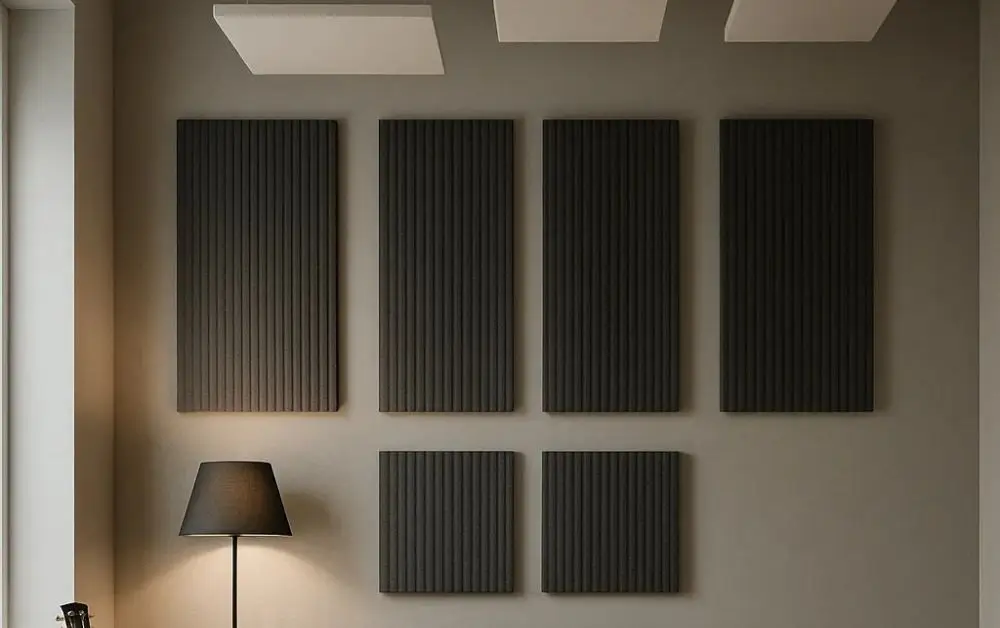
The Acoustic Wooden Panel is a strong solution for upgrading the aesthetics and performance of interior spaces. Strategically placed, these wooden panels work to control sound reflections, reduce reverberation, and promote acoustic comfort while bringing warmth and style into a room. In the United Arab Emirates, Perfect Acoustics is one of the best firms in soundproofing and acoustic solutions, offering professional installation of acoustic systems with the inclusion of high‑quality wooden panels.
In this blog, we go through the major types of acoustic wooden panels used for soundproofing, discussing their construction, application areas, advantages, and how to choose the right one for your environment.
1. Perforated Wooden Panels
One of the most common and effective types of acoustic wooden panels is perforated wooden panels. These panels consist of a timber or MDF surface with a pattern of perforations or drilled holes. Behind the wooden face lies an acoustic backing or cavity which serves to trap sound waves, converting their energy to heat or slowing them down, with the effect of reducing reflections and controlling reverberation.
Why choose perforated wooden panels?
- Those provide a balance between aesthetics (wood-grain finish, natural texture) and performance.
- It is suitable for offices, conference rooms, theatres, and luxury residences.
- Custom perforation patterns can be tailored to suit design themes, branding, or acoustic requirements.
- In practice, cavity depth, backing material, and panel spacing are what professionals like Perfect Acoustics consider in implementation to achieve the performance on targeted noise reduction or absorption.
Typical applications:
- Walls behind speakers or in lecture halls where clarity of sound is an issue.
- Decorative ceilings where the finish of the wood serves as a design element and acoustic treatment.
- Upscale residential lounges or hotel lobbies where looks and sound are essential.
2. Wooden Slat Panels / Timber Baffles
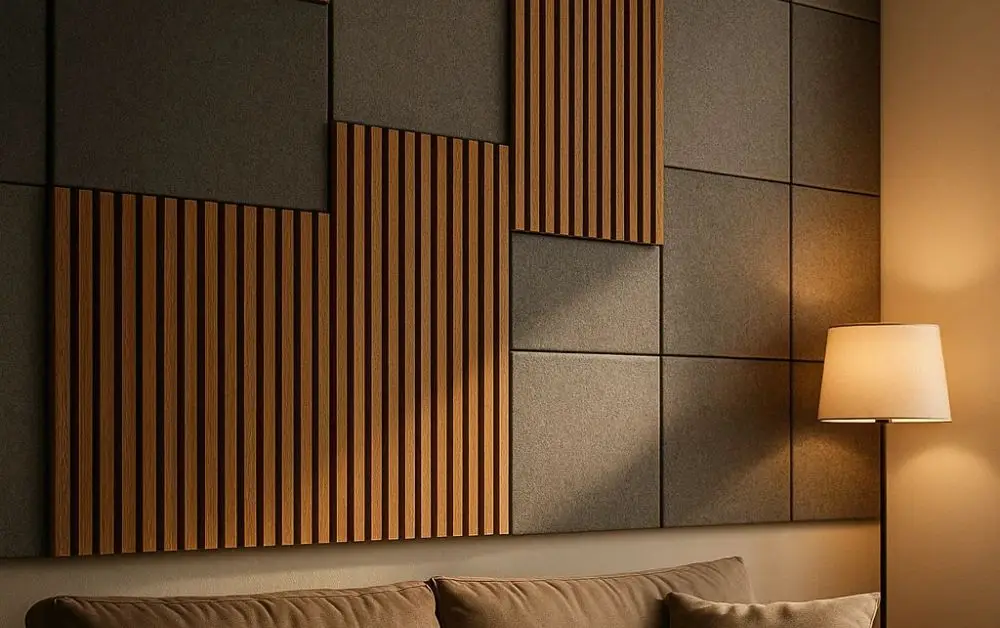
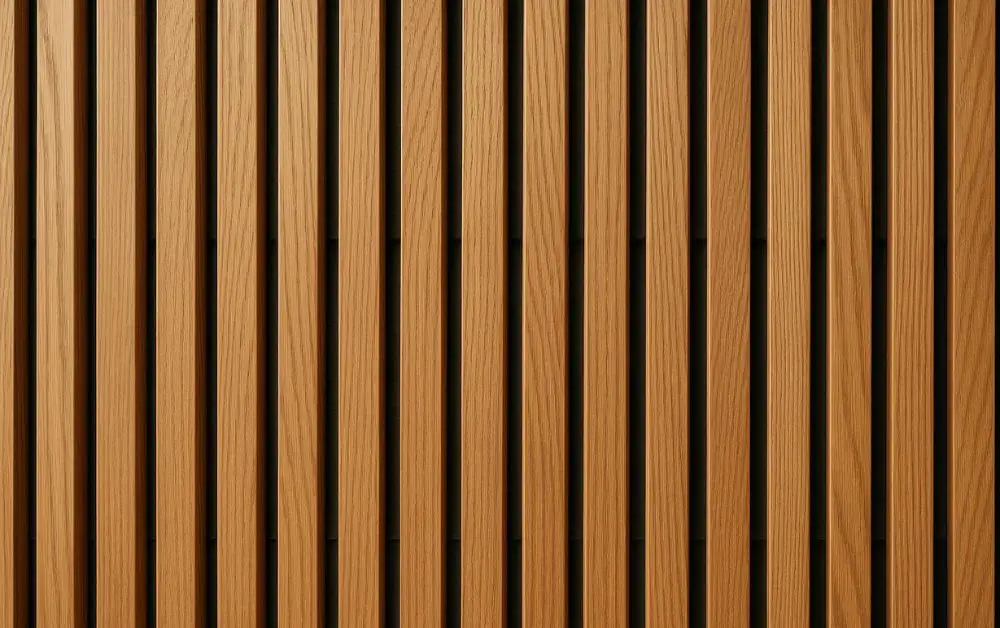
Another common variant is the wooden slat panel, sometimes called a timber‑slat acoustic panel or wood baffle. This design features narrow wood slats running in a vertical or horizontal direction, fixed to a substrate or acoustic core. The areas between the slats provide sound absorption or diffusive effects.
Key features:
- The rhythmic feel of the wooden slats is an attractive texture, bringing warmth and visual interest to a space.
- The acoustic effect is due to the cavity behind the slats and sometimes the absorption material behind. Sound penetrates between slats and is attenuated behind.
- These can also serve as diffusers, scattering the sound instead of merely absorbing it, which is helpful in spaces where clarity of speech and ambient comfort are concerns.
Where to use them:
- Restaurant ceilings or feature walls where you want design-forward acoustic treatment.
- Open-plan offices or coworking spaces where the control of ambient noise and enhancement of intelligibility are paramount.
- Domino effect rooms: recording rooms, media lounges requiring both aesthetic as well as acoustic sophistication.
3. Solid Wood Panels with Acoustic Backing-Wood Wool or Composite
For the scenarios where maximum absorption is needed, yet the wooden finish is still desired, solid wooden panels with acoustic backing exist. These might be made from wood-wool – an engineered wood fibre board – or composite panels in which a wood face is bonded to an acoustic core, such as mineral wool or fibreglass.
Advantages:
- Higher absorption across a wider frequency band, including at frequencies lower than with slat or perforated systems.
- Offers the visual appeal of a wood finish but delivers serious acoustic performance.
- Suitable for demanding spaces like auditoria, home theatres, recording studios, or hospitality venues.
Considerations:
- May require deeper installation or additional cavity behind panels to reach low‑frequency targets.
- Cost may be higher given the material and installation complexity.
- It’s crucial to hire experts who can evaluate the acoustic signature of the room and define the type and thickness of the panel.
4. Hybrid Wooden Panels (Absorption + Diffusion)
Hybrid wooden acoustic panels that integrate slats, perforations, and diffusive surfaces in one product are increasingly used by designers in spaces requiring a combination of controlling reflections, absorbing sound, and diffusing energy. Such examples include a wood front with curved slats or embedded diffusion recesses combined with absorption backing.
Why this solution makes sense:
- It offers a multi‑functional approach: some sound is absorbed and some is diffused, reducing echoes, flutter, and sharp reflections.
- Visually, these panels can become statement features, suitable for luxury interiors, creative offices, or modern hospitality venues.
- They provide acoustic comfort while maintaining design flexibility.
How to choose the right acoustic wooden panel
Choosing the right acoustic wooden panel is based on several crucial factors:
- Acoustic objective: Do you need primarily absorption (reduction of reverberation) or isolation, blocking sound from traveling? Generally, wood panels contribute to absorption rather than complete isolation, but some backed systems can help.
- Frequency range: For low-frequency noise-bass, HVAC rumble, music systems, the panel systems must be deeper or heavier and have a cavity behind.
- Aesthetic design: The wood finish, slat orientation, perforation pattern, and color should match the desired interior design theme.
- Installation environment: ceiling height, substrate of walls, air flow, especially in UAE environments, and whether the panels need access or maintenance.
- Expert specification: means proper acoustic and structural design and solutions tailored from evaluation to installation.
Also Read – Why Acoustic Wooden Panels are the Secret Ingredient in Luxury Interior Design?
Why Choose Perfect Acoustics for Acoustic Wooden Panels?
Perfect Acoustics is a recognized specialist in the United Arab Emirates for acoustic and noise‑control solutions. Their strengths include:
- Complete project life-cycle service: from acoustic measurement, design specification, through to installation and commissioning.
- A wide range of acoustic products includes wooden panel systems, partitions, absorbers, and diffusers.
- Experience across sectors, from offices to auditoria, retail, hospitality, and residences, means they understand varied acoustic challenges.
- Local UAE presence and understanding of regional conditions: climate, architecture, and materials. Very helpful when it comes to the selection of wooden systems for warm and humid regions.
Conclusion
Acoustic wooden panels provide a sophisticated, effective route to sound-optimal interiors. If you opt for perforated wooden panels, slat systems, solid wood with acoustic backing, or hybrid absorption/diffusion solutions, your choice should be guided by your acoustic goals, design vision, and installation context. Looking to integrate such a solution in the UAE region? Partnering up with Perfect Acoustics, a team with great experience, is a great idea. The goal here is to make sure your acoustic wooden panel installation not only looks premium but performs acoustically as it should. In short, by selecting the right Acoustic Wooden Panel and a trusted partner, you can both hear and feel the difference.