
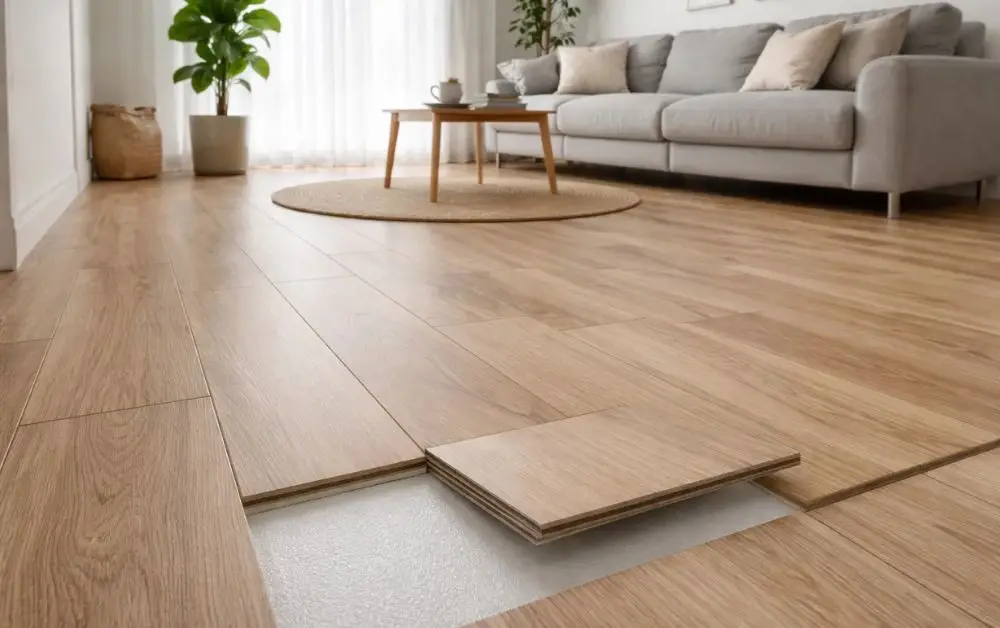
In choosing the best floor for your space, you’ll most likely decide between two types of flooring—floating or non-floating. It will influence not only the environment of your spaces and aesthetics of your interiors, but also performance factors such as acoustic comfort, ease of installation, cost effectiveness, and long-term durability. We will examine both options below to help you figure out which solution best suits your needs — whether you’re remodeling a home, outfitting an office, or building a commercial space.
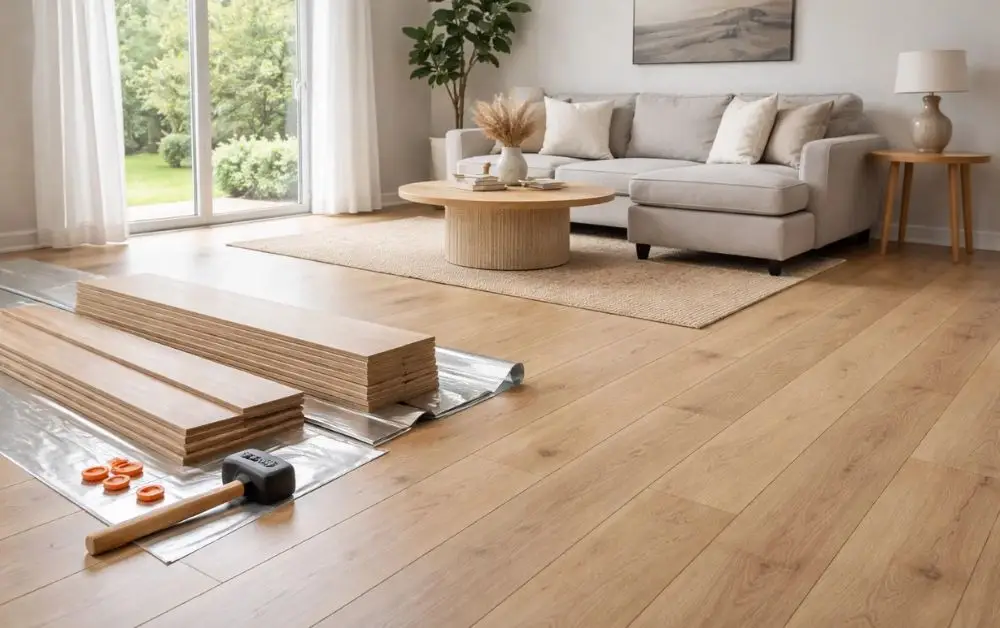
What Is a Floating Floor?
A floating floor is a type of installation that does not require the planks to be adhered or nailed to the subfloor. Instead, the panels are locked together as they rest over underlayment across a subfloor. The underlayment can also serve to provide sound absorption and increased comfort underfoot. Floating floors are typically made of materials such as laminate, engineered wood, some types of vinyl, and specialty acoustic systems.
What Is Fixed Flooring?
Fixed floors are directly fixed to the subfloor. That could be with nails, staples, adhesive glue, or cement — whatever process is best for the material (solid hardwood, ceramic tiles, and parquet are some examples). (3) Fixed ground is relatively flat, which allows for building compact and permanent structure fixation, resulting in an overall floor with enormous rigidity and stability.
Pros and Cons: Floating Floor
Pros:
1. Ease of Installation
Floating systems are usually faster to install than fixed floors. Installation is also cleaner and often cheaper (particularly for DIY projects or retrofits), since the planks don’t need nails or adhesive.
2. Versatility in Materials
You can select from a variety of materials — laminate, vinyl, engineered wood, or even acoustic floating flooring systems — which makes for an adaptable design strategy in residential applications as well as commercial spaces.
3. Acoustic and Thermal Benefits
Floating floors have an underlayment layer to absorb sound and smooth minor subfloor imperfections, but are not as thick or comfortable as a floor with a separate foam underlayment. It is convenient in high-rise and noise-sensitive applications.
5. Easy Maintenance and Replacement
If your floating floor is damaged or you want a new decor, it can be taken up and replaced without much hassle — an easier job than with glued or nailed floors.
Cons:
1. Potential Movement and Sound Issues
If not correctly put in, laminates can grow and contract with the temperature change or produce a noisy, hollow sound when walking on it. Some users mention a ‘spongy’ quality, depending on the material or an uneven subfloor.
2. Impact on Furniture Stability
If the floors aren’t fully locked together, or if they’re laid over an underlayment that’s less than perfect, you may notice some movement — but it will be worse with heavy furniture on top.
3. Not Ideal for All Materials
Anything very heavy or traditional could also possibly not work out well in a floating installation, and instead have to be installed with more solid methods.
Pros and Cons: Fixed Flooring
Pros:
1. Superior Stability
There is no reason to think it will collapse; however, you can feel that the fixed floor has a somewhat solid underfoot feel and moves very little. This may increase your comfort and limit the unwanted sounds that can typically arise, such as squeaks or hollow sounds.
2. Long-Term Durability
Products such as solid hardwood, ceramic tile, or stone, when installed correctly, will last decades under heavy use without shifting or gaps.
3. Premium Acoustic Feel
Specific fixed installations (particularly with appropriate underlay and floor preparation) can provide better consistency of acoustics because there is no give or expansion, as often is the case with panned approaches.
Cons:
1. Complex Installation
Permanent floors are typically more time-consuming to install and may need professional installation, especially with hardwood or tile units.
2. Higher Initial Cost
From both the upfront cost of materials and labor, fixed flooring is more expensive than a bare floating floor.
3. Challenging Repairs
Because the floor is secured to the subfloor, it’s harder to replace sections of a glued-down floor than one that floats.
Also Read – Why Floating Floors Are the Perfect Solution for Noise Reduction?
When to Choose Which?
Opt for a Floating Floor If:
- You need it to be cost-effective and fast to install.
- Too much Noise? Noise control and comfort underfoot are also (acoustic floating systems in particular) critical.
- You want to switch interior decorations often.
- You’re installing synthetic (engineered) material such as laminate or vinyl.
Choose Fixed Flooring If:
- You want something a little more solid, old school.
- Long-term and stable is the name of the game.
- What You’re Doing: You are working with materials that require a permanent bond, such as solid wood or tiles.
Enhancing Your Space with Smart Acoustic Solutions
Whether you opt for a floating or fixed floor, adding intelligent acoustic planning can enhance both comfort and sound environment. Premier companies such as Perfect Acoustics offer professional services in sound, acoustical treatment, noise assessment, and vibration isolation in the MENA region − from acoustic panels to floating floor systems and custom approaches to silence houses, offices, studios, and public spaces. Their know-how means that, no matter what type of flooring you choose, your space will provide the best in sound performance and a level of luxury.
Conclusion
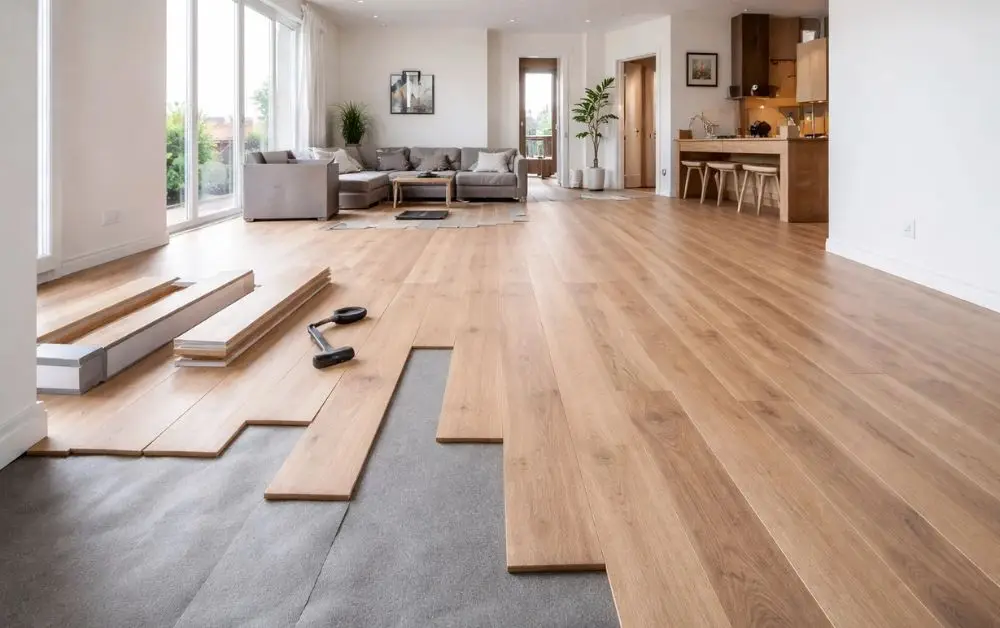
There is no easy answer in the floating floor vs. fixed flooring debate. Each approach has unique strengths and possible weaknesses. And why is that? A floating floor means you do not need to nail the floor onto your sub-floor, and it can be varied in terms of size or even material composition. Best for Stability, Durability, and a Premium Look. Fixed flooring offers timeless stability, durability, and classic beauty. In the end, it’s up to you and your tastes, needs, and future. And don’t forget — by applying the right acoustic solutions from brands like Perfect Acoustics, your space can sound as good as it looks.