
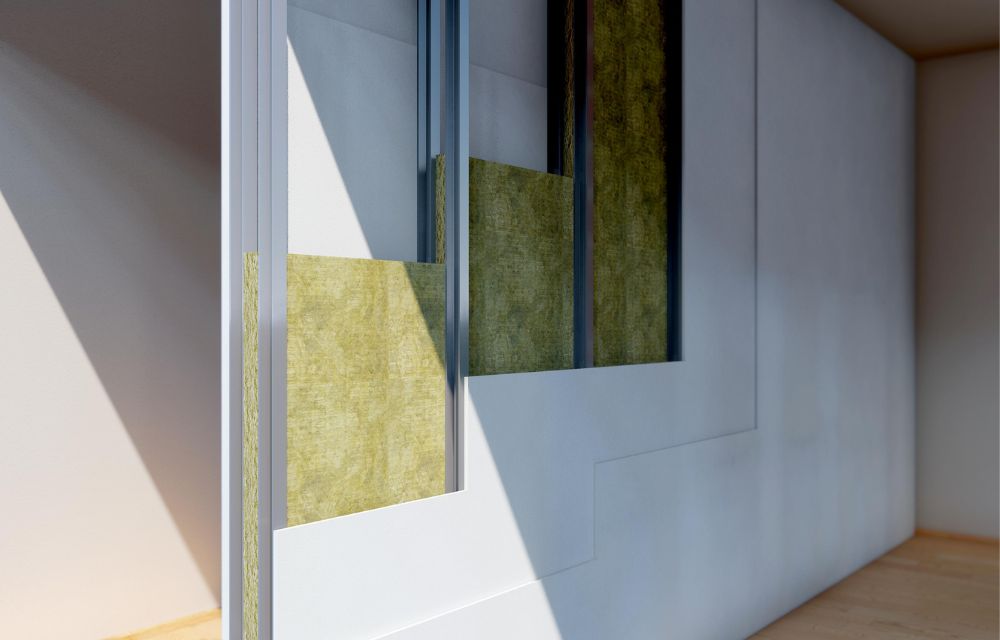
When we talk about noise problems in homes, offices, or buildings, most people think all sound is the same. But in reality, there are two main types of noise—airborne noise and impact noise. Understanding these differences is very important when choosing the right acoustic sound proof insulation solution. This knowledge helps you reduce unwanted noise effectively and create a more peaceful environment.
In this blog, we will explain both types of noise in very simple language so that anyone can understand what they are and how they can be controlled.

What is Airborne Noise?
Airborne noise is the most common type of sound we hear in daily life. It travels through the air in the form of sound waves.
Simple Examples:
- People talking or shouting
- TV or music sounds
- Traffic noise from outside
- Barking dogs
This type of noise starts in the air and moves until it hits surfaces like walls, ceilings, or windows. If these surfaces are not properly insulated, the sound passes through easily.
Easy Way to Understand:
Think of airborne noise like air passing through small gaps. Wherever air can pass, sound can also pass.
What is Impact Noise?
Impact noise is very different. It is created when something hits or touches a surface and creates vibrations. These vibrations then travel through the structure of the building.
Simple Examples:
- Footsteps from the floor above
- Furniture being moved
- Objects falling on the floor
- Doors slamming
Instead of traveling through the air, this noise moves through solid materials like floors, walls, and ceilings.
Easy Way to Understand:
Impact noise is like vibration spreading through a solid object, similar to how a vibration travels through a metal rod when struck.
Key Differences Between Airborne and Impact Noise
Understanding the difference between these two types of noise is very important for proper insulation.
1. Source of Noise
- Airborne Noise: Comes from sound waves in the air (speech, music)
- Impact Noise: Comes from physical contact (footsteps, drops)
2. How It Travels
- Airborne Noise: Travels through the air and enters through gaps or weak surfaces
- Impact Noise: Travels through solid structures as vibrations
3. Nature of Sound
- Airborne Noise: Usually lighter and higher frequency (voices, TV)
- Impact Noise: Often heavy and thudding (footsteps, banging)
4. Difficulty Level
- Airborne Noise: Easier to control with sealing and insulation
- Impact Noise: Harder to control because it travels through the structure
Why Acoustic Insulation is Important
Noise pollution can affect your comfort, sleep, and even health. Proper insulation helps reduce unwanted sound and improves indoor living quality.
Using the right type of insulation ensures:
- Better privacy
- Peaceful environment
- Improved productivity in offices
- Better living experience at home
How to Control Airborne Noise
Airborne noise can be reduced by blocking the path through which sound travels.
Common Solutions:
- Sealing gaps in doors, windows, and walls
- Using thicker walls or adding extra layers
- Installing acoustic panels
- Using dense insulation materials
The idea is simple: stop sound from passing through air gaps and weak surfaces.
How to Control Impact Noise
Impact noise requires a different approach because it travels through structures.
Common Solutions:
- Using carpets or soft flooring
- Installing acoustic underlay or mats
- Creating floating floors
- Adding ceiling insulation systems
These methods help absorb vibrations before they travel further.
Why Both Types Must Be Treated Together
In real-life situations, both airborne and impact noise can exist at the same time. For example:
- In apartments, you may hear voices (airborne) and footsteps (impact)
- In offices, you may hear conversations and furniture movement
If you only treat one type, the other will still disturb you. That’s why proper planning and combined solutions are important.
Related Blog – Why Acoustic Insulation Matters in Urban Living?
Role of Experts in Acoustic Insulation
Choosing the right insulation is not always easy because every building is different. This is where professional expertise becomes important.
Perfect Acoustics, a leading firm in sound, acoustics, noise control, and vibration control in the MENA region, provides advanced solutions tailored to different environments. Their expertise helps in identifying the exact type of noise problem and applying the right solution for maximum effectiveness.

Conclusion
Understanding the difference between airborne and impact noise is the first step toward effective soundproofing. Both types behave differently and require different solutions. Airborne noise travels through the air, while impact noise travels through building structures as vibrations.
By using the right acoustic soundproof insulation, you can control both types of noise and create a comfortable, quiet space. Whether it is your home, office, or commercial building, proper insulation plays a key role in improving sound quality and overall well-being.
With expert guidance from firms like Perfect Acoustics, you can ensure that your space is designed for peace, comfort, and better acoustic performance.