
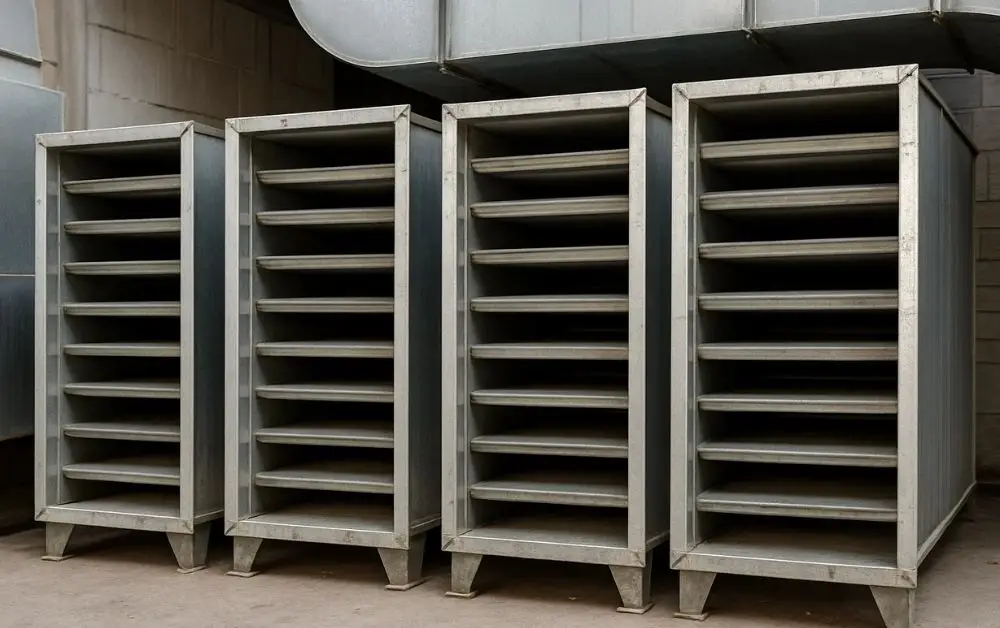
Noise pollution has become an issue that pervades every square inch of commercial, residential, and even industrial space in today’s fast-paced, highly interconnected world. At the very core of many effective noise-control strategies, however, is something rather humble yet powerfully efficient: the sound attenuator. These are crucial tools to reduce and manage undesirable environmental sound levels. Let’s learn how sound attenuators work, why they matter, and how partnering with a specialist such as Perfect Acoustics, a leading firm in soundproofing solutions here in the United Arab Emirates, can make all the difference in achieving quieter, healthier environments.
What is a Sound Attenuator?
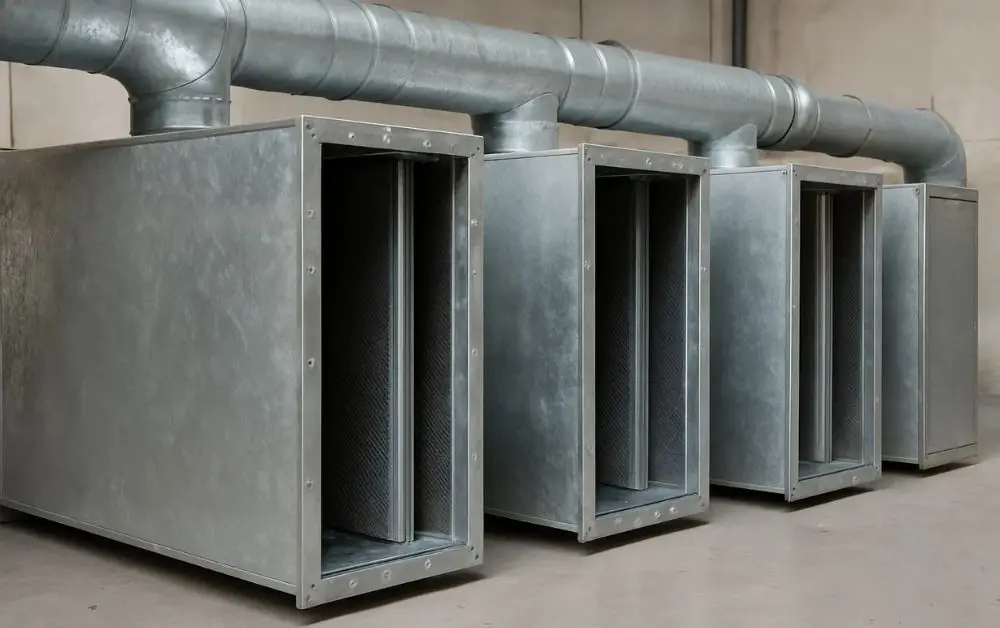
A sound attenuator is a mechanical or acoustic device used to reduce the level of noise transmitted through ducts, walls, and ceilings, or by other passages, without appreciably affecting the airflow or performance of the system. More simply, as air or sound passes through a duct or opening, the attenuator works to absorb or block part of the sound energy, so the downstream environment is quieter.
Typical applications for sound attenuators include commercial building HVAC systems that may be handling noise from fan rooms or mechanical plant rooms, exhaust system attenuation, or retrofits to older structures where noise intrusion is an issue. While materials and configurations may vary, most attenuators have the common objective of sound pressure level reduction while preserving airflow and system integrity.
How Sound Attenuators Work
There are two main ways noise moves: through airborne transmission, which involves sound travelling through the air, and structure-borne transmission, which is vibration carried through the building elements. A sound attenuator focuses on the airborne path, particularly where sound is carried via ducts, ventilation systems, or openings.
Here are the key mechanisms:
- Absorption: In most cases, the interior of the attenuator is lined with acoustic absorbent material (like mineral wool, acoustic foam, or special pads). Some of the energy passing through the lining is converted to heat when sound waves pass through it, rather than propagating further.
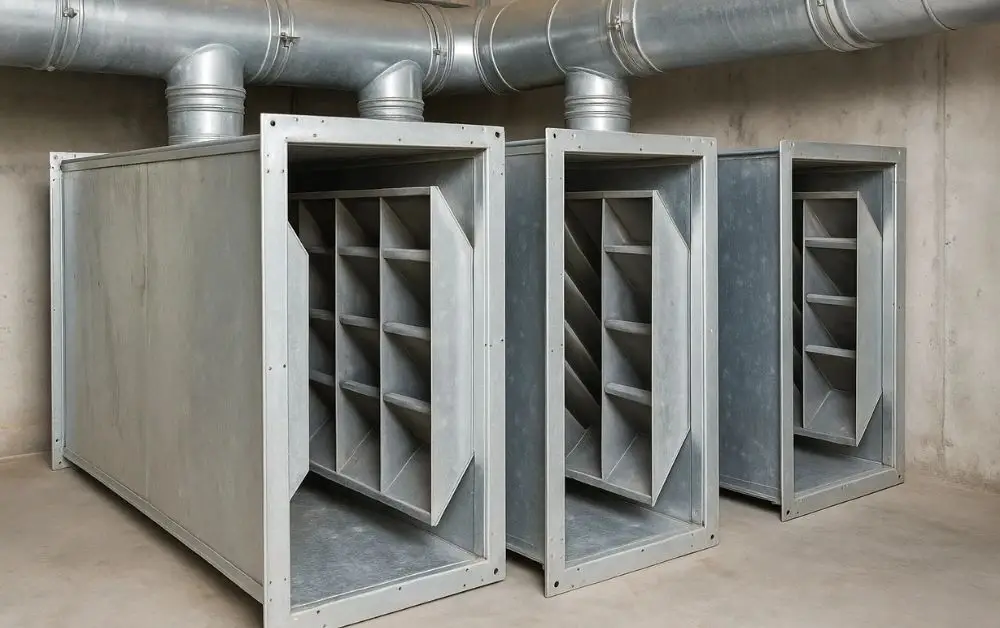
- Reflection & scattering: Some attenuators contain baffles or chambers that reflect or scatter sound waves, hence lessening the amplitude of the forward-traveling sound. The redirected energy is dissipated rather than continuing onward.
- Impedance: The attenuator provides changes in cross-section or uses perforated liners to make the sound wave lose its energy due to friction or turbulence – again reducing transmission.
The reduction in overall decibels, from a design perspective, depends on frequency, duct size, attenuator length, and lining type. For instance, a properly designed sound attenuator in a big duct may significantly reduce mid-to-high frequency noise, but creating it for low-frequency attenuation (such as big fan or pump noise) may require bigger or more sophisticated treatments.
Why Sound Attenuators are Important in Noise Reduction
1. Improved comfort of occupants
Excess noise in offices, homes, educational institutions, and hospitals distracts, causes stress, and further reduces productivity. By installing appropriate sound attenuators, the overall noise floor is reduced, creating a more comfortable acoustic environment.
2. Compliance with regulations and standards
Noise control regulations are imposed by many countries and building codes for commercial and residential spaces. A proper sound attenuation strategy will help in meeting legal requirements for acceptable sound levels.
3. Protection of hearing and health
High-noise levels, especially in the industrial sphere, may cause hearing damage or provoke health problems: stress, hypertension, and fatigue. Sound attenuators help in noise exposure reduction and health protection.
4. Enhanced sound quality and privacy
Noise transmission has to be managed in recording studios, auditoriums, or luxury residences for the sake of comfort and clarity of sound. A sound attenuator is part of that toolkit.
5. Energy and ventilation system integration
Since sound attenuators are designed to be integrated into HVAC or ventilation ducts, they allow for the maintenance of airflow while mitigating noise; as such, they are efficient in their use for combined thermal/air quality and acoustic management.
Role of a Specialist Firm: Perfect Acoustics in the UAE
When it comes to applying sound attenuators effectively, particularly in a region like the United Arab Emirates, where modern buildings often require high-performance acoustics, choosing the right partner is essential. Perfect Acoustics positions itself as a leading firm in soundproofing and acoustic solutions across the UAE.
The following are some of the reasons why they are unique:
- Complete acoustic services: Perfect Acoustics provides more than mere products, as it provides customized acoustic insulation, soundproofing, and noise control to the commercial, residential, industrial, educational, and hospitality industries.
- One-off design and installation: They realize that every area is different and they offer bespoke solutions, such as acoustic paneling, soundproofing insulation, and treatment by means of ducts.
- Quality control: The company pays attention to the high standards and the team of skilled specialists in acoustics and vibration control, who provide installations to the required level.
- Established reputation in the UAE market: They are established and headquartered in Dubai, doing projects all over the region, so they have practical experience with the architectural and regulatory environment of the Middle East.
On the same note, when the organization or the builders within the UAE are interested in implementing sound attenuators or a wider noise-control system, it is appropriate to engage a professional firm to have the engineering, installation and verification procedures carried out at a proper level as opposed to having the attenuator fail to work as required or cause harm to the airflow or efficiency of the system.
Also Read – How Sound Attenuators Improve Acoustic Performance in Buildings?
Best Practices and Concerns in the Usage of Sound Attenuators
- Size: An inappropriately small attenuator will not be able to deliver the necessary noise reduction, whereas an oversized one will be either expensive to purchase or could obstruct the airflow. Duct size, air speed, and the nature of the noise source should, in all cases, be taken into consideration.
- Match frequency range: Determine the dominant frequencies of the noise you want to control (fan hum, HVAC rumble, mechanical equipment) and select an attenuator rated for those frequencies.
- Maintaining airflow and pressure: The attenuator design shall not interfere with the ventilation system. High pressure drop or turbulence will eventually affect system performance.
- Location does matter: Place the attenuator as close to the noise source as practical (e.g., near fan rooms) to intercept the noise before it travels further into occupied spaces.
- Consider maintenance access: A good attenuator design allows for inspection, cleaning, and future lining replacement without significant dismantling.
- Complement with other treatments: Many times, sound attenuators are part of a comprehensive solution that includes wall/ceiling insulation, acoustic panels, vibration isolation, and sealing gaps.
- Verification & testing: Actual noise levels are measured after installation to check performance. Adjustments may be needed if the real world is different from the specification.
Conclusion
Under the pursuit to make built environments sound, healthy, and comfortable, the sound attenuator is an essential element of the quest. Sound attenuators refer to appliances applied to minimize sound transmission through the air in the HVAC systems, ducting, and building doors without compromising the functioning of the system. It will be clear to organizations located in the UAE that their cooperation with such experts as Perfect Acoustics does not imply only the supply of products but also comprehensive acoustic expertise in accordance with the local conditions and requirements. With appropriate design, installation, and verification, a sound attenuator will become a valuable investment: it improves the well-being of occupants, ensures compliance with the regulations, and provides an acoustic identity to any space. And you do not merely cut down the noise with the right partner, you make your world clear, comfortable, and serene.